


The 7 Types of Pet Owner — A Field Guide

In the interest of science, and after years of careful observation, we present this entirely affectionate taxonomy of the people who walk through our doors.
Every veterinary professional develops, over time, a quiet internal classification system. You see a name on the consult list and you already know, roughly, what you're walking into. Not because you're judging — you're not — but because humans, bless them, are wonderfully predictable.
Here, for the first time, is the official field guide.
1. The Researcher

Arrives with a printed list of questions. Has already read the relevant literature. Knows the name of the condition they suspect, the first-line treatment, and three contraindications. May have watched a YouTube video of the procedure.
Identifying features: Notebook. Highlighter. The phrase "I did a bit of reading."
Natural habitat: The front row of any waiting room. Arrives early.
How to handle: Take them seriously — because they are serious. They've done the work and they deserve a real conversation. The Researcher is actually one of the best clients you'll ever have, even when they challenge you. Especially when they challenge you.
What they're really saying: I love my animal so much that I did homework.
2. The Denier

Everything is fine. The limping has been going on for six weeks but it's "probably nothing." The lump has "always been there." The cat has lost two kilograms but "she's just a picky eater."
Identifying features: Opens with "I'm probably being paranoid but..." Follows up with information that is absolutely not paranoid.
Natural habitat: Delayed. They've been meaning to come in for a while.
How to handle: Gently, without making them feel foolish for waiting. The Denier isn't neglectful — they're usually anxious. The appointment itself was the hard part. They made it. Work with that.
What they're really saying: I'm scared of what you might find.
3. The Catastrophiser
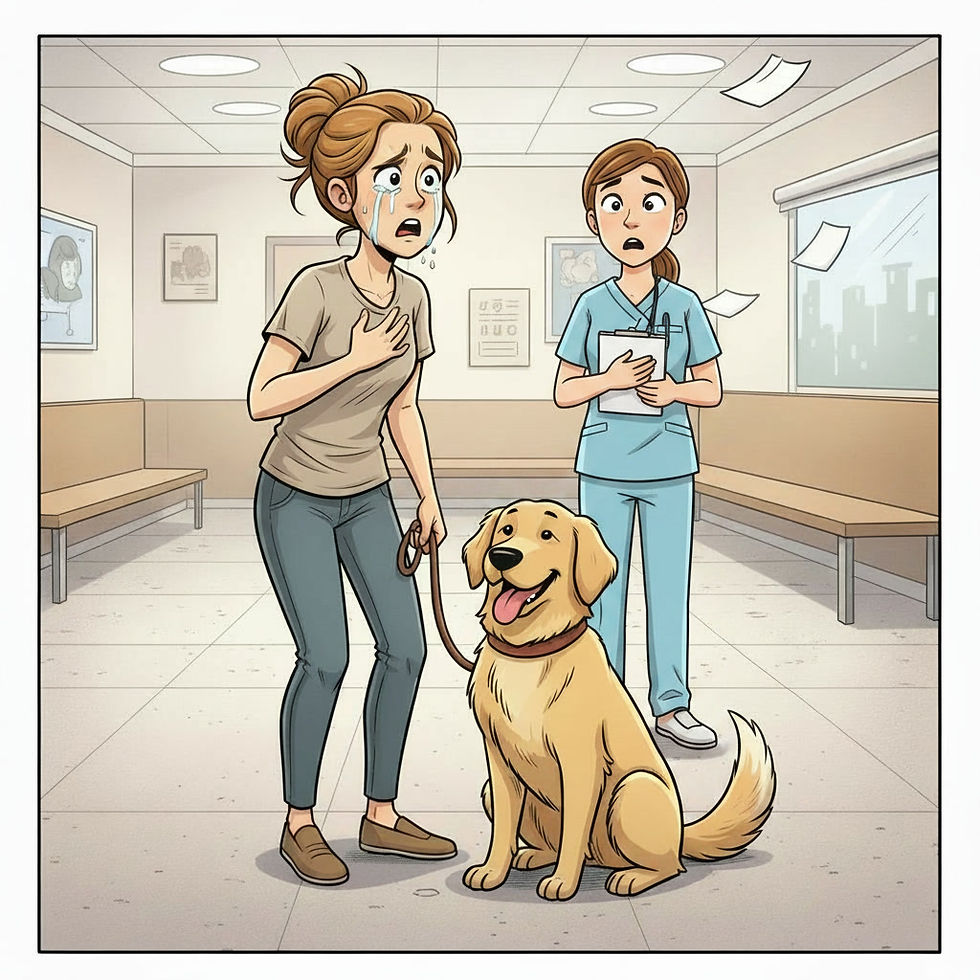
The opposite of the Denier. Something has gone slightly wrong and they are absolutely certain the animal is dying. The dog sneezed twice. The cat slept more than usual. There was one soft stool.
Identifying features: Already crying in the waiting room. Has texted three family members on the way in. The pet is, clinically, completely fine.
Natural habitat: Emergency clinics at 11pm.
How to handle: With enormous warmth and zero condescension. The Catastrophiser loves their animal with a ferocity that is actually quite beautiful. Reassurance is the medicine here. Give it generously.
What they're really saying: This animal is my whole world and I cannot bear the idea of losing them.
4. The Negotiator

Receives the treatment plan and immediately begins to see which parts are optional. Could we maybe skip that blood test? What if we just did the first medication and not the second? Is there a shorter course? A cheaper option? A middle ground?
Identifying features: Starts sentences with "What if we just..."
Natural habitat: Everywhere. Negotiators are the most common species.
How to handle: Listen to what's driving the negotiation — because it's not always money. Sometimes it's fear of giving tablets. Sometimes it's previous bad experiences. Sometimes it genuinely is financial constraint. Understanding the reason changes how you respond.
What they're really saying: I want to do the right thing but I need help figuring out what that looks like for us.
5. The Veteran

Has owned animals their entire life. Has seen everything. Has strong opinions about what works and what doesn't, formed over forty years of experience, and is not entirely convinced that modern veterinary medicine has improved on what their previous vet did in 1987.
Identifying features: "My last vet always used to..." Brings their own opinions on dosing. May have already administered something from the shed.
Natural habitat: Agricultural practices, but found everywhere.
How to handle: Respect the experience while gently updating the information. The Veteran has earned their opinions. They haven't always earned the right to act on them without consultation, but they've earned to be heard. Meet them where they are.
What they're really saying: I've been doing this longer than you've been alive, so hear me out.
6. The Apologiser
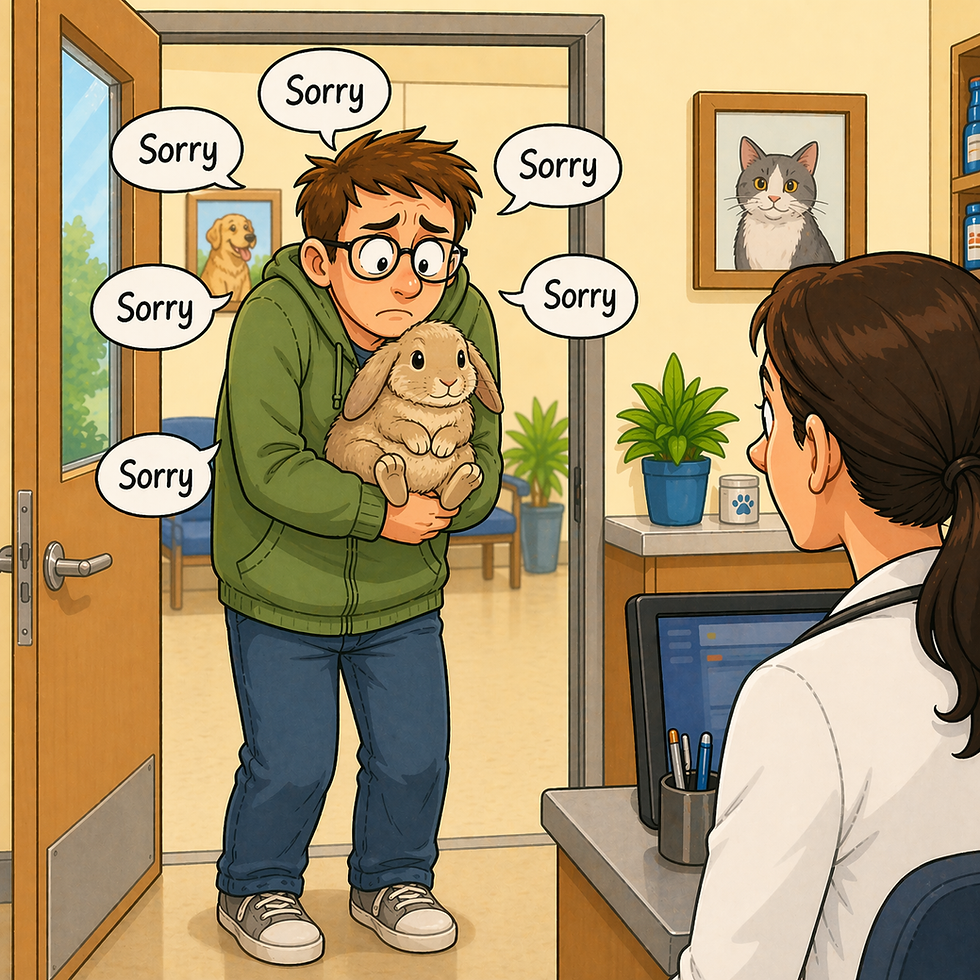
Sorry for calling. Sorry for coming in. Sorry he's being difficult. Sorry for taking up your time. Sorry for the question — it's probably a stupid question. Sorry for existing in this waiting room.
Identifying features: Apologises before, during, and after the appointment. Thanks you approximately seven times on the way out.
Natural habitat: Quietly in the corner, hoping not to be any trouble.
How to handle: Reassure them explicitly and often that they are not a bother. They are not a bother. Their question is not stupid. Coming in was the right call. The Apologiser often delays seeking care because they don't want to waste anyone's time — which means they need to hear, clearly, that their animal's health is worth the appointment.
What they're really saying: I wasn't sure if this was important enough to bother you with.
7. The One Who Is Fine, Actually

Comes in for a routine vaccination. Animal is healthy. Owner is relaxed. The appointment runs to time. Everyone leaves happy. The pet gets a treat. A brief moment of pure, uncomplicated veterinary joy.
Identifying features: On time. Calm dog. Up to date on everything. Asks one normal question and accepts the answer.
Natural habitat: Rare. Treasure them.
How to handle: Enjoy it. Genuinely. These appointments exist to remind you why you got into this — not every consult is a puzzle or a crisis or a negotiation. Sometimes a dog just needs its needles and everyone goes home fine.
What they're really saying: Thank you for taking care of us.
A note on all of them
Every single one of these people loves their animal. That's the thing that unites them across all the chaos and the delays and the difficult conversations. The Denier, the Catastrophiser, the Negotiator — they're all there because they care.
That's worth remembering at 4:45pm on a Friday when the waiting room is full and the consult list won't end.
They showed up. For the animal they love. Just like you did.
Which type do you see most often? And which one do you secretly find the most endearing? Tell us in the comments — we won't judge. Much.


Comments